As a new year begins, many of us take stock of how we live—how we eat, how we work, how we rest, and how we celebrate. The idea of balance often rises to the top of these reflections, especially after a season marked by indulgence and excess. In this conversation, wine is frequently misunderstood. It is either dismissed as a guilty pleasure or elevated to a symbol of luxury and escapism. In reality, wine has long occupied a more nuanced role: not as an indulgence to fear, but as a companion to a well-lived, intentional life.
For much of history, wine was never about extremes. In traditional wine cultures across Europe, wine existed as part of daily life, not apart from it. It was consumed with meals, shared among family and friends, and valued as much for its social function as its sensory pleasure. Moderation was not a moral directive but a natural consequence of context. Wine was something to enjoy slowly, alongside food and conversation, rather than something consumed for effect. This cultural framing offers a useful lens as modern drinkers reconsider how wine fits into a balanced lifestyle.
Balance does not require abstinence, nor does it excuse excess. Instead, it asks for intention. Wine, when approached thoughtfully, encourages presence. It asks you to slow down, to taste rather than consume, to notice aromas, textures, and subtle shifts in flavor. This sensory engagement is inherently grounding. A single glass, enjoyed with attention, can be more satisfying than several consumed mindlessly. In this way, wine aligns naturally with broader lifestyle goals around mindfulness and quality over quantity.
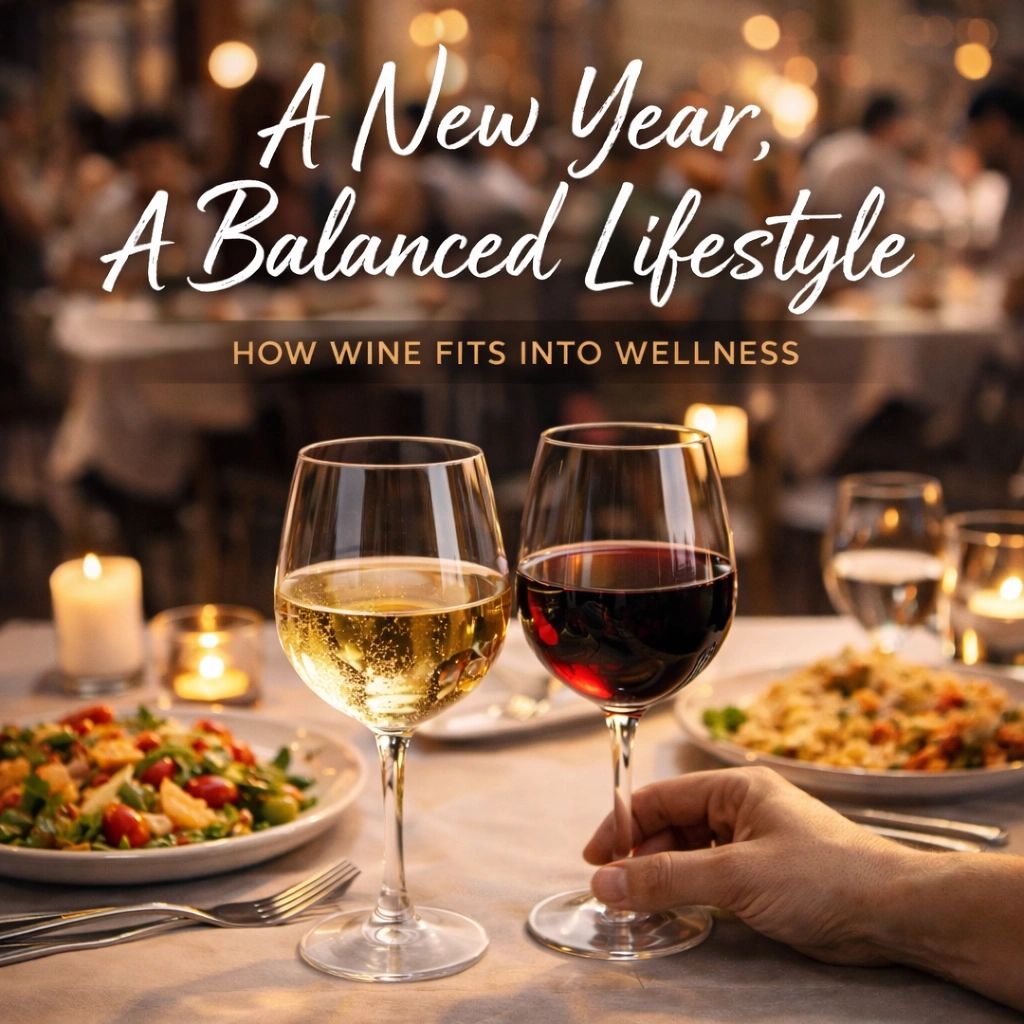
A balanced relationship with wine also begins with understanding context. Wine shines brightest when paired with food, both nutritionally and experientially. Food slows alcohol absorption, enhances flavors, and transforms wine from a standalone indulgence into part of a holistic experience. Cooking a simple meal at home and pairing it thoughtfully can be as nourishing emotionally as it is physically. This ritual—planning, preparing, pairing, and sharing—anchors wine in routine rather than excess, making it part of daily life rather than an escape from it.
Modern conversations about wellness often frame alcohol as something to eliminate entirely, yet balance allows for more nuance. For many people, wine serves as a connector: a way to mark transitions from work to rest, solitude to community, weekday to weekend. These rituals matter. They signal boundaries, reward effort, and foster connection. When wine is used to enhance these moments rather than to numb stress or fatigue, it supports rather than undermines well-being.
Choosing wine thoughtfully is another key element of balance. Paying attention to alcohol levels, production methods, and serving sizes can make a meaningful difference. Lower-alcohol wines, lighter styles, and wines made with minimal intervention often feel more harmonious with an active lifestyle. But balance is not about rigid rules; it’s about awareness. Knowing how a certain wine makes you feel—physically and mentally—and adjusting accordingly is part of building a sustainable relationship with it.
Balance also means giving yourself permission to say no. A healthy relationship with wine includes the confidence to skip a glass when it doesn’t serve you, without guilt or explanation. It also includes the freedom to say yes when it does. Wine should never feel compulsory, whether socially or habitually. When choice replaces obligation, enjoyment naturally deepens.
Perhaps most importantly, wine supports balance through connection. Few things bring people together as effortlessly as sharing a bottle. Wine invites conversation, storytelling, and lingering at the table. In a world increasingly defined by speed and distraction, these moments of shared presence are valuable. They nourish mental and emotional health in ways that are harder to quantify but no less real.
As the new year unfolds, balance does not have to mean subtraction. It can mean refinement—choosing better, savoring more deeply, and aligning habits with values. Wine, when approached with intention, fits comfortably within this framework. It is not an obstacle to balance but an opportunity to practice it. A glass poured thoughtfully, enjoyed slowly, and shared generously can remind us that a balanced life is not about denying pleasure, but about engaging with it wisely.


