As the global wine industry turns the page into 2026, it finds itself at a pivotal moment—defined by seismic shifts in consumer behavior, climate realities, technological innovations, and complex economic landscapes. For producers, marketers, and wine lovers alike, understanding these forces is essential not just for survival, but for meaningful growth in an increasingly dynamic marketplace.
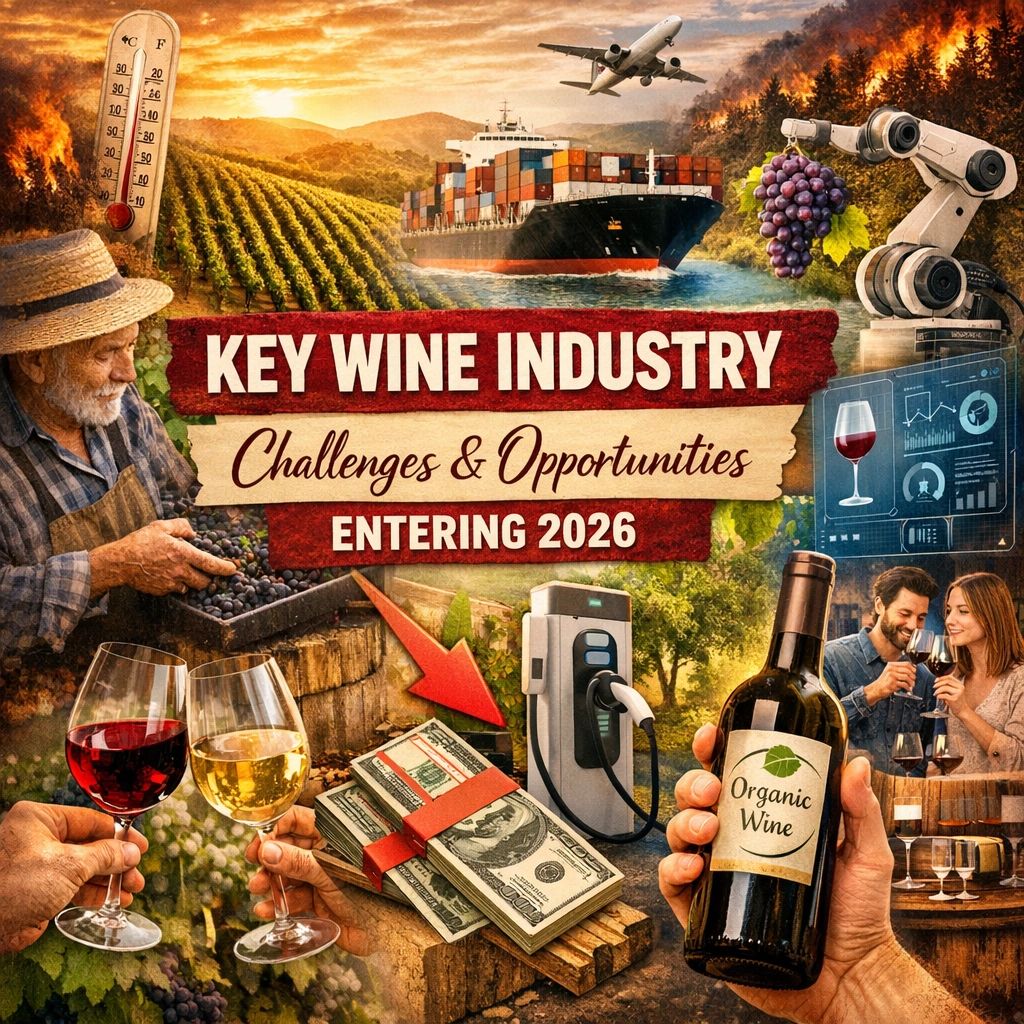
One of the most pressing challenges the industry faces is a sustained decline in traditional wine consumption, particularly in mature markets like the United States. Recent data show that U.S. wine demand has contracted sharply in both volume and revenue, extending what analysts call the longest downturn in modern history. (Wine-Intelligence) This trend reflects broader shifts in drinking habits: younger consumers increasingly choose spirits, craft beer, and ready-to-drink cocktails over wine, while older demographics—who have traditionally underpinned wine sales—now represent a growing share of the market. (BPM)
Complicating matters are structural pressures from trade policy and macroeconomic uncertainty. Tariff volatility and geopolitical tensions have disrupted exports and supply chains, affecting margins across the value chain. Domestic producers may benefit somewhat from tariffs on imported wines in certain markets, but retaliatory duties and import costs threaten access to vital export markets, squeezing international revenue streams. (BPM)
Climate change remains an existential challenge for viticulture. Unpredictable weather patterns—ranging from droughts and heatwaves to late frosts and wildfires—are altering harvest timelines, stressing vines, and jeopardizing grape quality. (Wine Industry Advisor) Traditional growing regions like California, Bordeaux, and Tuscany are rethinking long-term strategies, experimenting with drought-resistant varieties, canopy management techniques, and irrigation innovations to maintain consistency in the face of temperature extremes. (ByTheMag.com) These environmental pressures are forcing a fundamental reimagining of what constitutes a “traditional” wine region, as cooler climates in northern Europe, Canada, and even Scandinavia produce competitive vintages. (ByTheMag.com)
Labor shortages and workforce challenges also persist, particularly in labor-intensive vineyard and harvest work. Stricter immigration policies and an aging field workforce have pushed many producers toward mechanization and automation—capital investments that are difficult for smaller wineries to absorb. (bistrotorestro.com) At the same time, succession planning remains a weak link for many family-run estates, opening the door for consolidation as larger entities absorb struggling wineries. (AMW)
Amid these challenges, however, lie compelling opportunities for innovation and reinvention. Perhaps the most transformative force is technology. Artificial intelligence, sensors, data analytics, and precision viticulture are enabling growers to optimize irrigation, predict yields, and improve crop health with unprecedented accuracy. (ByTheMag.com) Digital tools are also reshaping consumer engagement, from virtual tastings and subscription clubs to app-based recommendations and AI-enhanced label information that can demystify wine for newcomers. (Forbes) Blockchain and IoT technologies are enhancing traceability and authenticity—critical in premium and collectible markets where provenance is paramount. (Vinetur)
Consumer preferences themselves are evolving in ways that create new market niches. While overall consumption may be down, demand is rising for wines that align with wellness, authenticity, and sustainability values. Organic, biodynamic, and low-intervention wines are no longer fringe products but have moved into mainstream consideration, particularly among Millennials and Generation Z. (Wine Trade Insights) Similarly, the market for low- and no-alcohol wines and alternative fermented beverages is gaining traction as drinkers prioritize moderation and lifestyle alignment. (San Francisco Chronicle)
Experiential and direct-to-consumer models also hold significant promise. With traditional on-premise sales channels—restaurants and bars—facing pressures of their own, wineries are doubling down on immersive tasting experiences, vineyard events, and personalized tours to strengthen brand loyalty and justify premium pricing. (ByTheMag.com) Meanwhile, robust e-commerce platforms and digital wine clubs give producers direct access to consumers around the world, reducing reliance on traditional distributors and opening new revenue streams. (ByTheMag.com)
Finally, the story of wine in 2026 is one of narrative as much as product. Today’s drinkers seek connection with place, people, and purpose. Wines with authentic stories—whether rooted in regenerative agriculture, cultural heritage, or innovative techniques—are increasingly rewarded with attention and premium pricing in an otherwise crowded marketplace. (Wine Trade Insights)
In conclusion, the coming year promises a complex interplay of headwinds and tailwinds. The industry’s ability to adapt—embracing climate resilience, leveraging technology, diversifying consumer offerings, and nurturing meaningful brand relationships—will determine which producers flourish in 2026 and beyond. For those willing to innovate while honoring the craft’s enduring traditions, the future of wine remains rich with possibility.


