Wine and chocolate pairing may sound indulgent, but beneath the romance lies a surprisingly rigorous bit of sensory science. Both wine and chocolate are chemically complex, packed with hundreds of aromatic compounds and a powerful trio of taste drivers: sweetness, bitterness, and acidity. The challenge—and the pleasure—comes from managing how these elements interact on the palate. When pairings fail, it is often because one overwhelms the other, usually the wine. Chocolate’s fat content coats the mouth and dulls perception of acidity and subtle aromas, while cocoa solids bring intense bitterness and astringency. This means that most dry wines, especially light-bodied reds and crisp whites, will taste thin, sour, or metallic when paired with chocolate. Successful pairings begin by recognizing chocolate as the dominant partner and choosing wines with enough sweetness, body, and aromatic intensity to stand up to it.
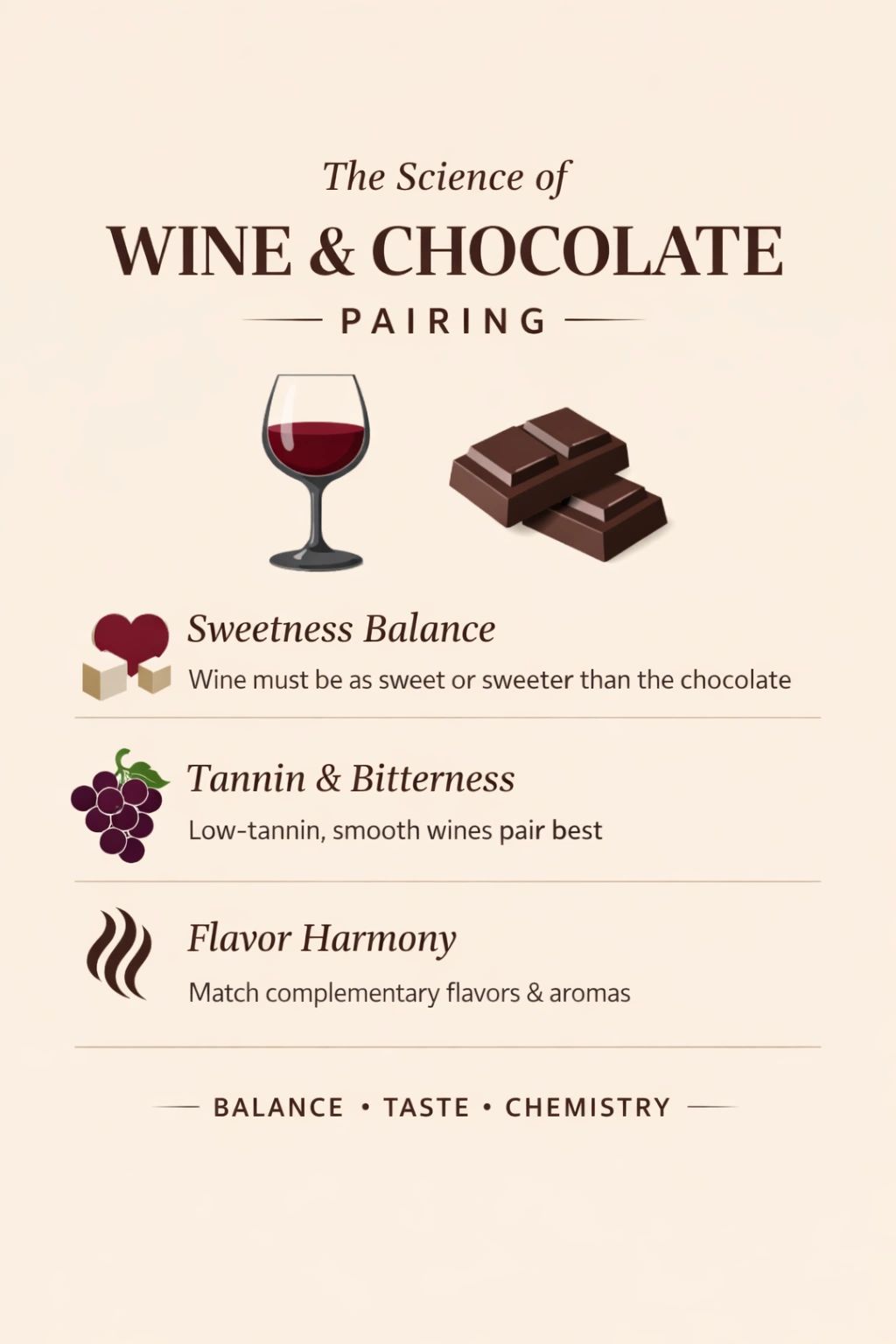
Sweetness alignment is the first scientific rule of pairing. Our brains interpret contrast in sweetness as imbalance: if the chocolate is sweeter than the wine, the wine will register as sharply acidic and bitter. This is why dessert wines—such as Port, Madeira, or late-harvest styles—work so reliably. Their high sugar content keeps them from tasting harsh next to chocolate, while their elevated alcohol and glycerol add viscosity that matches chocolate’s richness. At the same time, cocoa bitterness interacts with tannins in wine, amplifying dryness. This explains why high-tannin reds like Cabernet Sauvignon struggle with chocolate, while lower-tannin, fruit-forward wines such as ruby Port or Brachetto d’Acqui perform better. The chemistry is simple: tannins bind with proteins and polyphenols from cocoa, intensifying the sensation of a dry mouth.
Flavor compounds provide the second layer of science. Chocolate contains pyrazines, aldehydes, and esters that produce roasted, nutty, and caramel-like aromas. Many fortified and sweet wines share these compounds due to oxidative aging or noble rot, creating what sensory scientists call “flavor congruence.” For example, the caramel and dried fruit notes in tawny Port mirror the Maillard reaction flavors in milk chocolate, while the berry esters in ruby Port echo the fruity side of dark chocolate. White chocolate, which lacks cocoa solids but is rich in fat and vanilla, pairs best with wines that emphasize creamy textures and vanilla-derived oak compounds, such as Sauternes or late-harvest Riesling.
The percentage of cocoa in chocolate further shapes the interaction. Dark chocolate (70% and above) contains more polyphenols, increasing bitterness and astringency. This calls for wines with both sweetness and bold fruit to counteract those sensations. Milk chocolate, with added sugar and dairy fats, softens bitterness and allows more flexibility, including nutty or caramel-toned wines. Even spice inclusions—like chili or sea salt—trigger different sensory responses: capsaicin heightens perception of alcohol, while salt suppresses bitterness and enhances sweetness, subtly shifting which wines will work best.
Ultimately, wine and chocolate pairing is a study in balance between sweetness, bitterness, fat, and aromatic overlap. The science teaches us that it is less about matching “red with dark” or “white with white” and more about managing chemical intensity and sensory contrast. When done thoughtfully, the result is not just a dessert but a controlled experiment in pleasure—one where chemistry, perception, and indulgence converge in a single bite and sip.


