
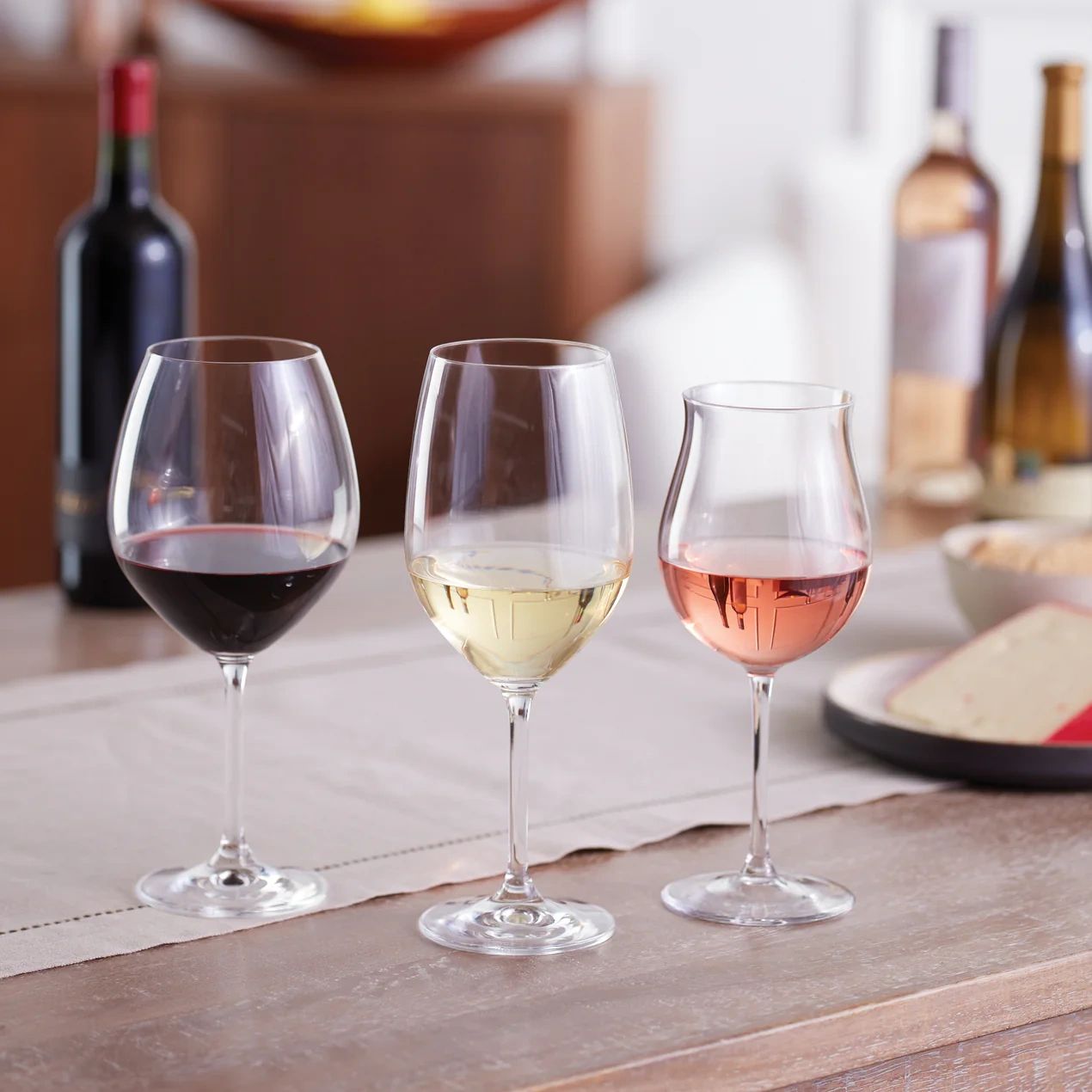
Wine enthusiasts know that the experience of savoring a good bottle extends far beyond the liquid itself—it encompasses the ambiance, the company, and importantly, the glassware. Wine glasses aren't just decorative; they play a crucial role in enhancing the aroma, flavor, and overall enjoyment of your wine. In this guide, we'll explore the different types of wine glasses and how each can elevate your drinking experience.
1. Red Wine Glasses
Bordeaux Glasses: These glasses are characterized by their tall, broad bowl and narrow rim. Designed to accommodate full-bodied reds like Cabernet Sauvignon and Merlot, the wide bowl allows for maximum aeration, helping to release the wine's complex aromas and flavors. The narrow rim directs the wine to the back of the mouth, enhancing its rich, robust qualities.
Burgundy Glasses: Slightly wider and rounder than Bordeaux glasses, Burgundy glasses are perfect for lighter, more delicate reds such as Pinot Noir. The shape encourages the wine to spread across the palate, enhancing subtle flavors and aromas. This design also allows for a more concentrated bouquet, making every sip a sensory delight.
2. White Wine Glasses
Chardonnay Glasses: These glasses typically have a medium-sized bowl that’s slightly tapered. They are designed to enhance the richness of full-bodied whites like Chardonnay while maintaining balance. The shape allows the wine to breathe, revealing its complex layers of fruit and oak.
Sauvignon Blanc Glasses: For lighter, crisper whites such as Sauvignon Blanc, opt for a smaller, narrower glass. The slim bowl helps to concentrate the wine’s fresh, zesty aromas and keeps the wine colder for longer. This shape is ideal for preserving the vibrant acidity and refreshing character of these wines.
3. Sparkling Wine Glasses
Champagne Flutes: The classic Champagne flute is slender with a long stem and narrow bowl. This design preserves the bubbles and showcases the sparkling wine’s effervescence. The narrow bowl also directs the aromas to the nose while maintaining the cold temperature, enhancing the overall freshness of the drink.
Champagne Saucer: While less common today, the Champagne saucer (or coupe) has a wide, shallow bowl and is often associated with vintage cocktails and celebrations. It’s thought to have been popularized in the 18th century and is occasionally used for its nostalgic appeal. However, it doesn’t preserve bubbles as effectively as the flute.
4. Dessert Wine Glasses
Port Glasses: Port glasses are small and have a short, wide bowl. They’re designed to accommodate the rich, concentrated sweetness of Port wine. The shape allows for proper aeration, ensuring that the wine’s robust flavors and aromas are fully expressed.
Sherry Glasses: Similar to Port glasses but generally narrower, Sherry glasses are intended for fortified wines with a more delicate profile. The shape helps to concentrate the wine’s nuanced aromas and preserve its unique characteristics.
5. Universal Wine Glasses
All-Purpose Glasses: If you’re looking for versatility, universal wine glasses are a great option. They’re designed to be suitable for both red and white wines, making them ideal for casual dining or less formal occasions. While they might not enhance specific types of wine as well as dedicated glasses, they offer a practical solution for varied wine drinking.
Tips for Choosing the Right Glass
- Consider the Wine: The type of wine you’re drinking is the biggest factor in choosing the right glass. Full-bodied reds, light whites, and sparkling wines each benefit from different glass shapes and sizes.
- Material Matters: Opt for lead-free crystal glasses for the best clarity and durability. Crystal is often thinner and more delicate, allowing for a better sensory experience.
- Size and Shape: The bowl size and shape of the glass can influence how the wine’s aromas are perceived. Larger bowls allow for more aeration, while narrower bowls concentrate aromas.
- Balance and Feel: A good wine glass should feel comfortable in your hand and have a well-balanced base to prevent tipping.
- Keep It Clean: Ensure your wine glasses are spotlessly clean. Any residue or smudges can affect the taste and aroma of your wine.
Choosing the right wine glass can truly elevate your drinking experience. Whether you’re enjoying a robust Bordeaux or a crisp Sauvignon Blanc, the right glass will help you appreciate every nuance and flavor of your favorite wines. So, next time you pour a glass, consider how the shape of your glass can enhance the overall enjoyment. Cheers to savoring every sip with the perfect glass!


