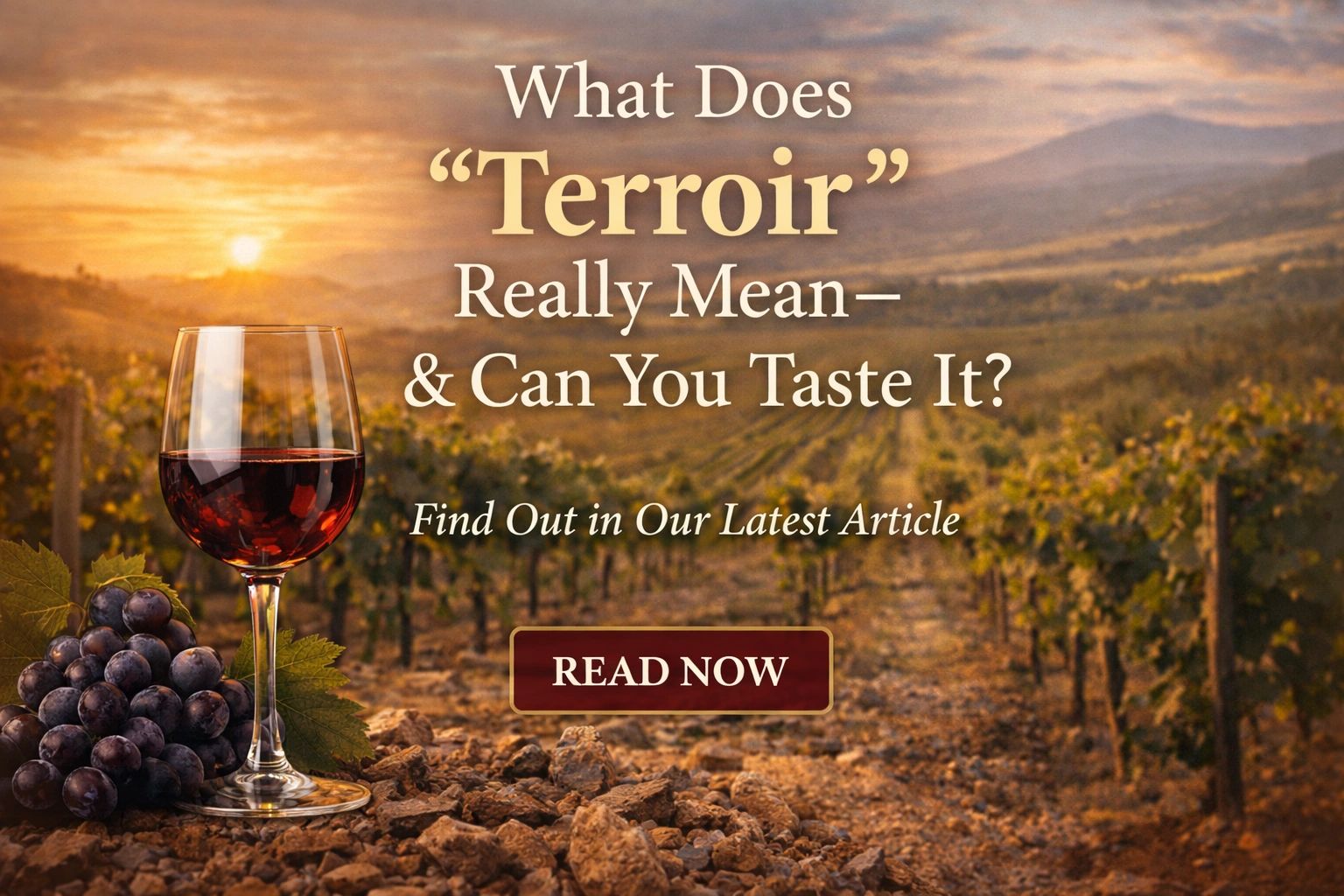
Few wine terms are used as often—or debated as passionately—as terroir. The word appears on tasting notes, wine labels, and sommelier lips with an air of quiet authority. But what does terroir actually mean, and is it something you can truly taste in the glass?
Terroir is a French term that loosely translates to “sense of place,” but its meaning goes far beyond geography. At its core, terroir refers to the complete natural environment in which grapes are grown: soil composition, climate, rainfall, temperature swings, altitude, slope, sun exposure, and even the microorganisms living in the vineyard. Together, these elements influence how grapes grow, ripen, and ultimately express themselves as wine.
Unlike grape variety, which is easy to identify, terroir is subtle and cumulative. It doesn’t shout—it whispers. Two Pinot Noirs made from the same clone, by the same winemaker, using identical techniques can taste dramatically different if grown in different places. One might be light, earthy, and mineral-driven; the other ripe, plush, and fruit-forward. The difference lies not in the hand of the winemaker, but in the land beneath the vines.
Soil is often the most romanticized aspect of terroir. Limestone soils can lend brightness and tension, while clay retains water and promotes richness. Volcanic soils are frequently associated with savory or smoky characteristics. But terroir isn’t just what’s underground—it’s what happens above ground, too. Cool climates tend to produce wines with higher acidity and restrained fruit, while warmer regions yield riper flavors and fuller bodies. Diurnal shifts—warm days followed by cool nights—help grapes retain freshness while developing complexity.
Then there’s the human factor. Some purists argue terroir excludes human influence, but many modern wine thinkers include traditional farming practices passed down through generations as part of a region’s identity. Whether vines are dry-farmed, hand-harvested, or trained in a specific way can shape how terroir is expressed, even if the goal is to let the land speak with minimal interference.
But can you actually taste terroir? The honest answer is: sometimes, and often with context. Terroir is easiest to perceive when wines are made with restraint—less oak, lower manipulation, and minimal additives. In these wines, nuances like minerality, salinity, herbal notes, or a distinct textural feel can hint at origin. Tasting wines side by side from different regions is often the “aha” moment when terroir clicks.
That said, terroir isn’t a single flavor you can point to and name. It’s more of a pattern than a note, a consistent thread that emerges over time and repeated experience. It’s why Chablis tastes unmistakably like Chablis, and why Barolo rarely masquerades as anything else.
In the end, terroir isn’t about mystique or elitism—it’s about connection. It’s the idea that wine can be more than fermented grape juice; it can be a liquid record of place, season, and landscape. Whether you taste it immediately or grow into understanding it over time, terroir is what gives wine its soul—and keeps us coming back, glass after glass. 🍷


